
Description
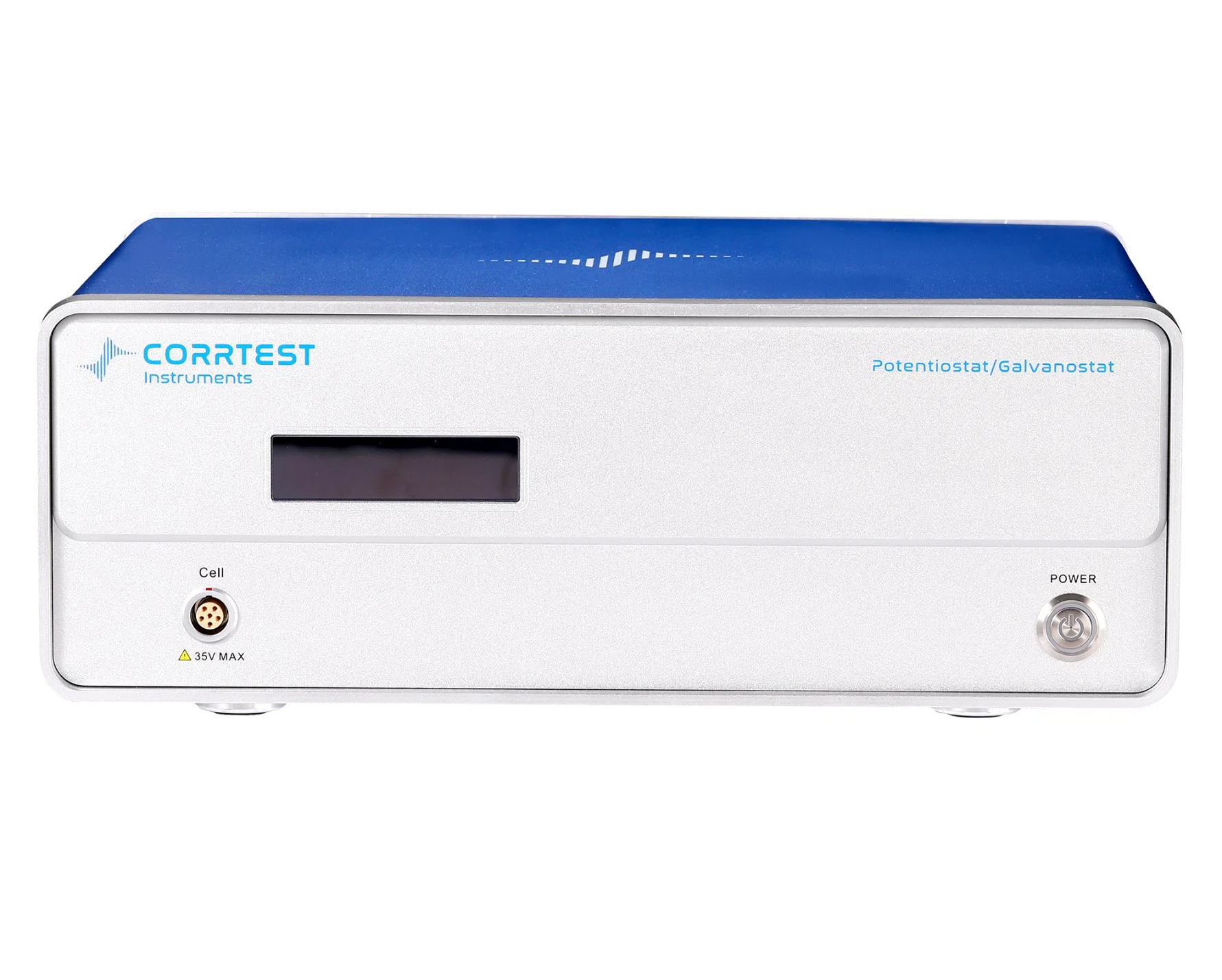
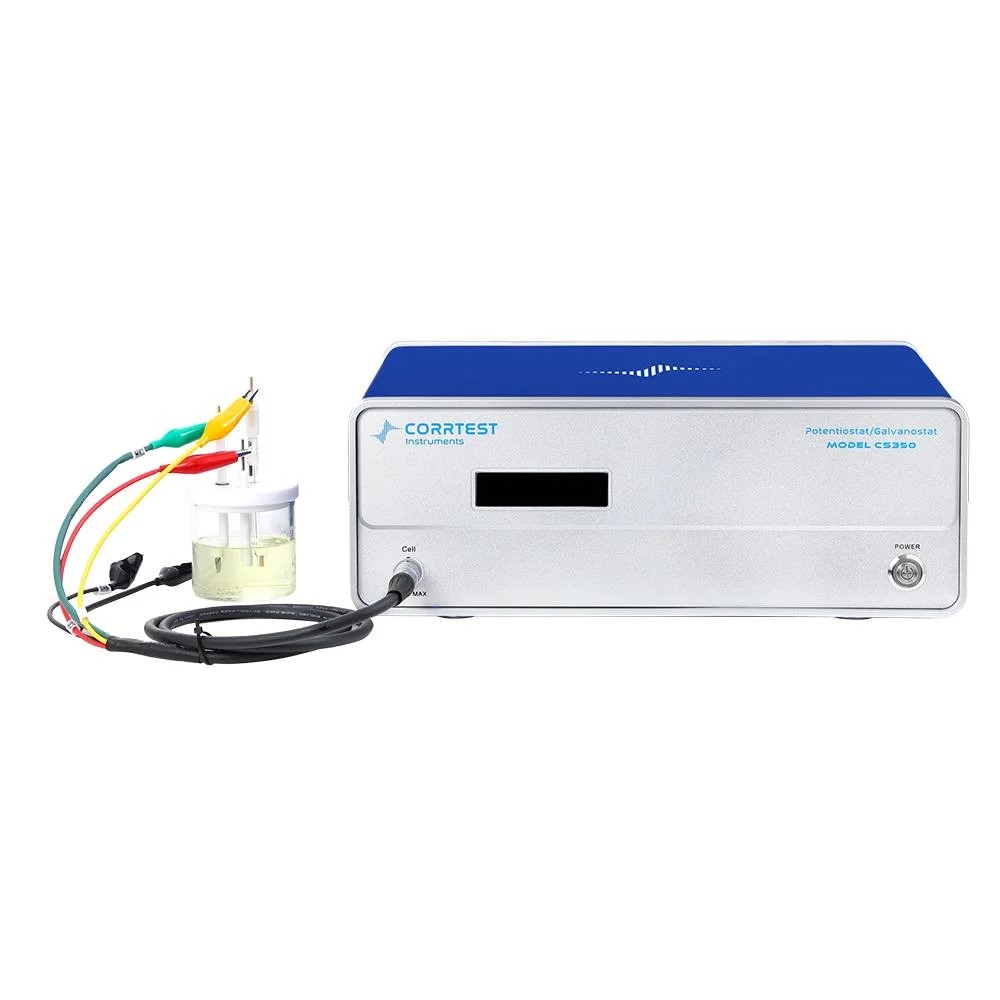
CS electrochemical workstation (potentiostat / galvanostat) contains a fast digital function generator, high-speed data acquisition circuitry, a potentiostat and a galvanostat. With high performance in stability and accuracy with advanced hardware and well-functioned software, it is a comprehensive research platform for corrosion, batteries, electrochemical analysis, sensor, life science and environmental chemistry etc.
Application
Reaction mechanism of Electrosynthesis, electrodeposition, anodic oxidation, etc;
Electrochemical analysis and sensor;
New energy materials (Li-ion battery, solar cell, fuel cell, supercapacitors), advanced functional materials, photoelectronic materials;
Corrosion study of metals in water, concrete and soil, etc;
Fast evaluation of corrosion inhibitor, water stabilizer, coating and cathodic protection efficiency.
| Specifications | |
| Support 2-, 3- or 4-electrode system | Potential and current range: Automatic |
| Potential control range: ±10V | Current control range: ±2A |
| Potential control accuracy: 0.1%×full range±1mV | Current control accuracy: 0.1%×full range |
| Potential resolution: 10μV (>100Hz),3μV (<10Hz) | Current sensitivity:1pA |
| Rise time: <1μS (<10mA), <10μS (<2A) | Reference electrode input impedance:1012Ω||20pF |
| Current range: 2nA~2A, 10 ranges | Compliance voltage: ±21V |
| Maximum current output: 2A | CV and LSV scan rate: 0.001mV~10,000V/s |
| CA and CC pulse width: 0.0001~65,000s | Current increment during scan: 1mA@1A/ms |
| Potential increment during scan: 0.076mV@1V/ms | SWV frequency: 0.001~100 kHz |
| DPV and NPV pulse width: 0.0001~1000s | AD data acquisition:16bit@1 MHz,20bit@1 kHz |
| DA Resolution:16bit, setup time:1μs | Minimum potential increment in CV: 0.075mV |
| IMP frequency: 10μHz~1MHz | Low-pass filters: covering 8-decade |
| Operating System: Windows10/11 | Interface: USB 2.0 |
| Weight / Measurements: 6.5kg, 36.5 x 30.5 x16 cm | |
| EIS (Electrochemical Impedance Spectroscopy) | |
| Signal generator | |
| Frequency range:10μHz~1MHz | AC amplitude:1mV~2500mV |
| DC Bias: -10~+10V | Output impedance: 50Ω |
| Waveform: sine wave, triangular wave and square wave | Wave distortion: <1% |
| Scanning mode: logarithmic/linear, increase/decrease | |
| Signal analyzer | |
| Integral time: minimum:10ms or the longest time of a cycle | Maximum:106 cycles or 105s |
| Measurement delay: 0~105s | |
| DC offset compensation | |
| Potential automatic compensation range: -10V~+10V | Current compensation range: -1A~+1A |
| Bandwidth: 8-decade frequency range, automatic and manual setting | |
Electrochemical methods/Techniques (Models’ comparison)
Guidance:
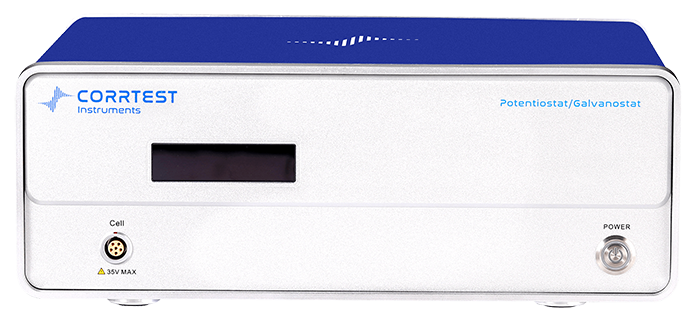
Hardware specs and appearance are the same for various models, difference is in software part.
Model CS350M (with built-in EIS) is the most comprehensive model, includes all methods incl. EIS. It’s suitable for various applications, and also for teaching
Model CS310M (with built-in EIS) also includes EIS module. But it has less voltammetry methods compared with CS350M. CS310M is a cost-effective model if you need EIS. It’s an ideal model for corrosion, battery studies etc.
Model CS300M (without EIS) includes all the voltammetry methods but EIS, usually used in heavy metal ions detecting etc.


